
Chiang Rai
The first Lanna capital — white, blue and black temples, tea hills and the point where three countries meet.
Art, faith and the far north
Chiang Rai, founded in 1262 by King Mengrai, was once the capital of the Lanna Kingdom — the cradle of northern Thai culture and tradition. Set between rolling mountains and misty valleys near the borders of Laos and Myanmar, the city still carries the quiet grace of its royal past alongside the creative spirit that defines it today.
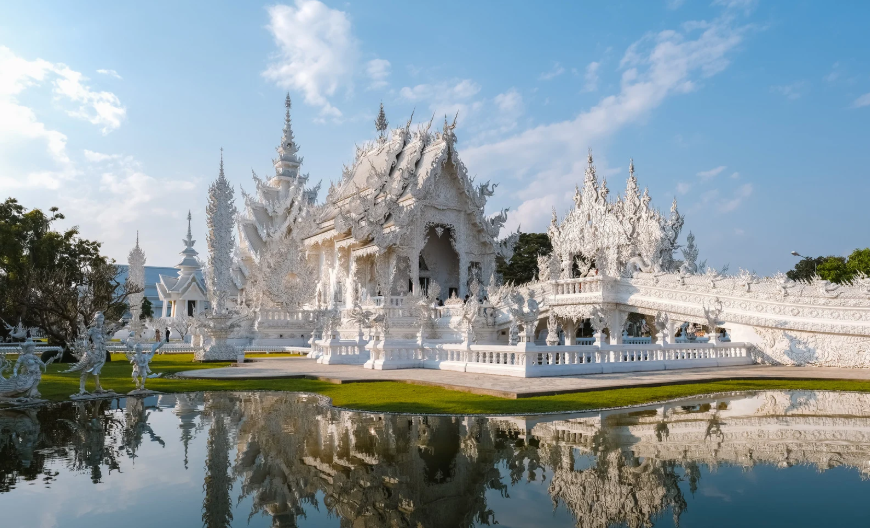
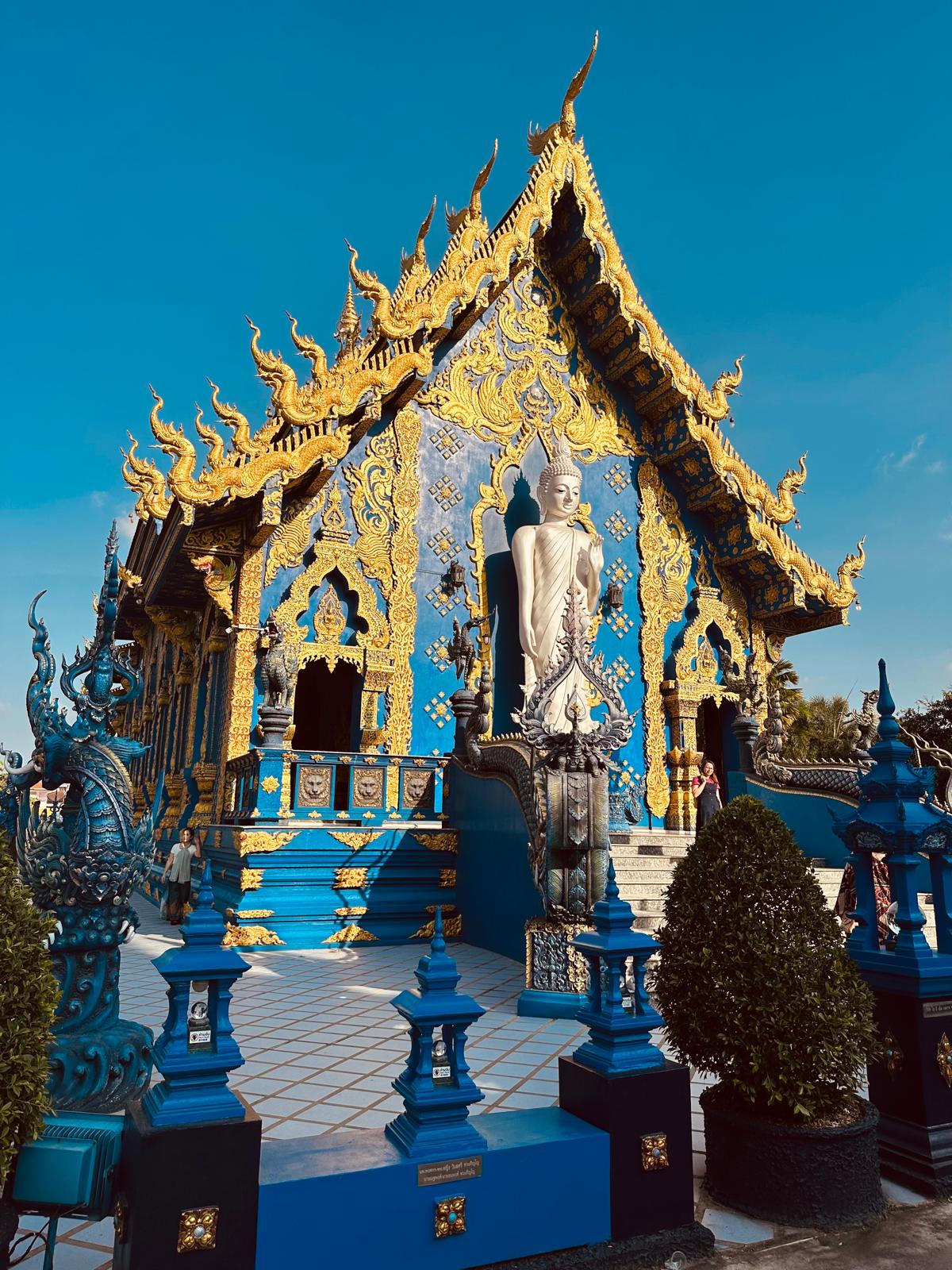
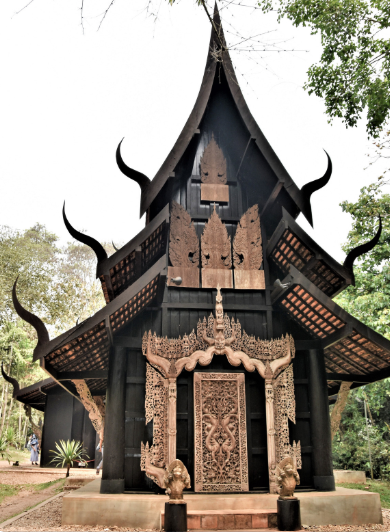
It is best known for its extraordinary temples, each one a piece of symbolism and imagination. The White Temple (Wat Rong Khun), created by the artist Chalermchai Kositpipat, is a surreal fusion of art and faith, reflecting heaven and earth in mirror mosaics. Nearby, the Blue Temple (Wat Rong Suea Ten) dazzles with sapphire tones and intricate murals, while the Black House (Baan Dam) — the provocative work of Thawan Duchanee — explores the darker side of spirituality and human nature.
Beyond its artistic landmarks, Chiang Rai is the gateway to the Golden Triangle, where Thailand, Laos and Myanmar meet. Once known for the opium trade, the region now lives on museums, viewpoints and cultural exchange. The city also thrives as a centre for hill tribe communities, coffee culture and eco-tourism, offering a more reflective and authentic experience than its southern sister, Chiang Mai.
Chiang Rai is not only a place to visit — it is a place to feel. A city that invites you to explore the connection between art, faith and the landscapes of the northern soul.
From Chiang Mai, the slow way
The journey from Chiang Mai to Chiang Rai is more than a transfer — it is a route through the heart of northern Thailand. The road winds through green mountains, tea-covered hills and small villages that show the quiet beauty of rural life.
One of the highlights along the way is Mae Salong (Santikhiri), a former Kuomintang settlement turned into a peaceful mountain community surrounded by endless tea plantations. The cool air carries the scent of oolong, and small wooden houses look out over a sea of mist and terraced hills. It is a perfect stop for local flavour, history and long views.
Not far from there, travellers often hear about the so-called “giraffe village”, home to the Karen long-neck women. The real community, Ban Huay Pu Keng, is in Mae Hong Son province and lives with dignity and cultural authenticity. The small roadside version near Chiang Rai tells a different story, where a handful of women wait to pose for photos with tourists. What many expect to be a meaningful cultural encounter often feels uncomfortable, and raises questions about ethics, representation and respect — a reminder that travel should not only be about seeing, but about understanding.
Where three countries meet
About an hour north of Chiang Rai lies Chiang Saen, one of the oldest towns in northern Thailand and the gateway to the Golden Triangle — the point where Thailand, Laos and Myanmar meet along the Mekong River. The region, once notorious for the opium trade, now offers a fascinating look at both its history and its transformation.
The Golden Triangle viewpoint opens onto three countries at once: Thailand’s green hills, the riverbanks of Laos and the misty mountains of Myanmar. It is a place where geography turns into history, and where every horizon seems to hold a story.
Today Chiang Saen and the Golden Triangle stand as a crossroads of cultures — a place to reflect, explore and see how history, trade and nature come together at the edge of three nations.
Chiang Rai moments
A quieter north
Chiang Rai is the perfect base for exploring the far north of Thailand, a region where art, culture and nature meet. After the temples and the tea hills of Mae Salong, you can carry on towards the Golden Triangle for boat trips, cycling routes and viewpoints across three countries.
It is a quieter, more authentic alternative to Chiang Mai — ideal for travellers who want to slow down, take in the landscape and feel the artistic and cultural soul of the north at their own pace.