
Doi Inthanon
The roof of Thailand: 2,565 metres of cloud forest, waterfalls, royal pagodas and mountain villages, two hours from Chiang Mai.
The highest peak in the country and the king who protected it
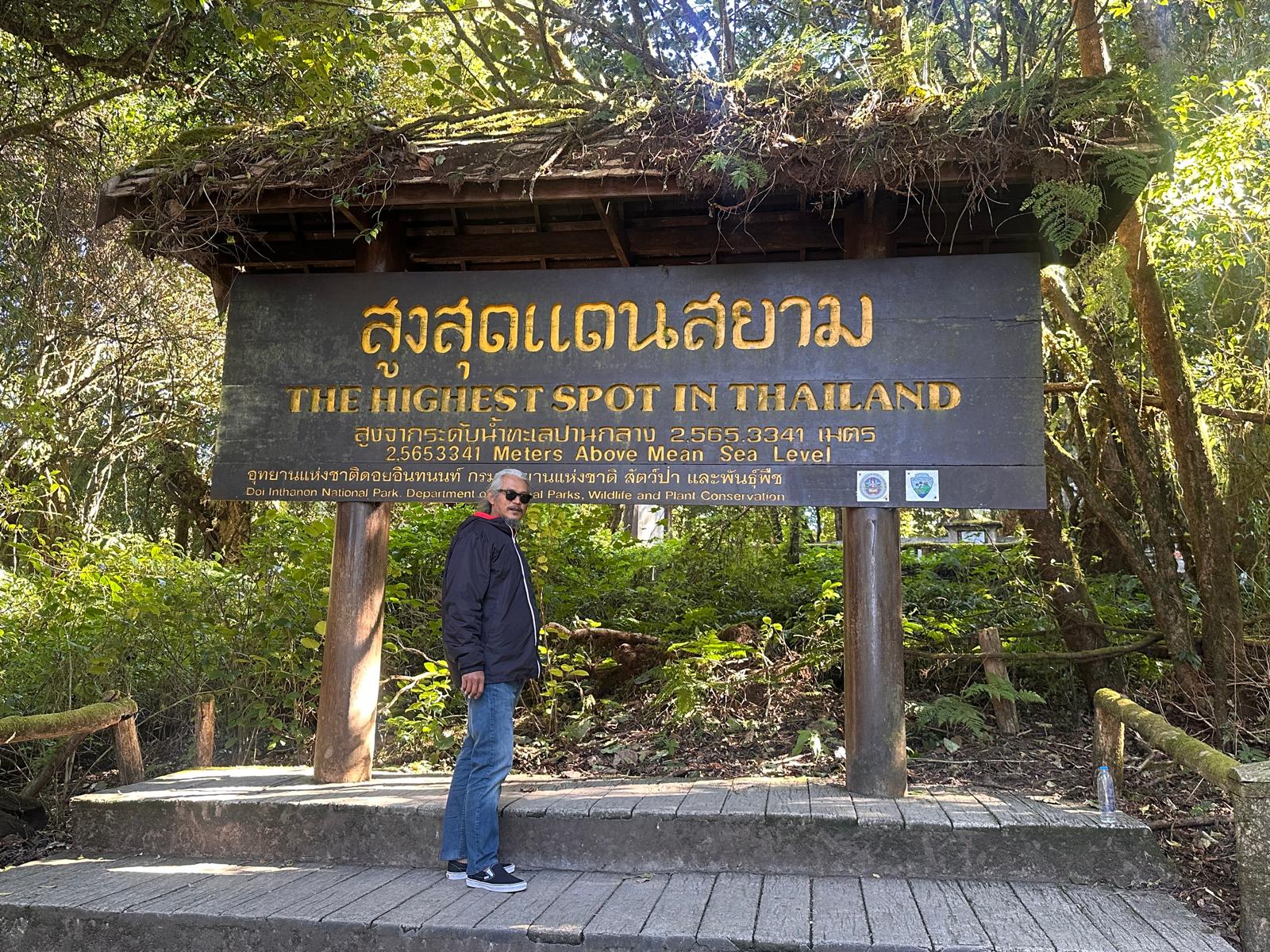
About two hours from Chiang Mai, Doi Inthanon rises 2,565 metres above the plain: the highest point in Thailand and the coldest place in the country, where January temperatures can drop below zero at dawn.
For centuries the mountain was called Doi Luang, the “great mountain”. Its present name comes from Inthawichayanon, the last king of Chiang Mai, who spent much of his life protecting the northern forests and asked for his ashes to rest here. His stupa still stands near the summit, among the trees.
In 1972 the area was declared a national park. Across its 482 km², tropical forest in the lower reaches gives way to cloud forest higher up — an ecosystem rare in Thailand, home to more than 360 bird species, many of them impossible to see anywhere else in the country.
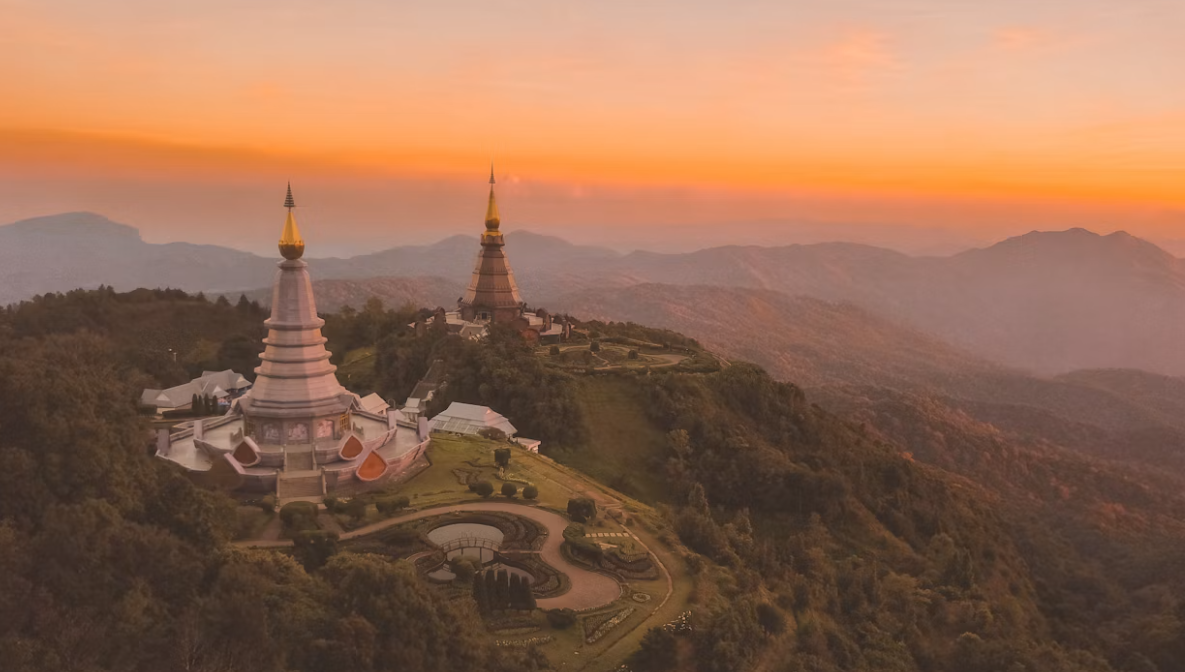
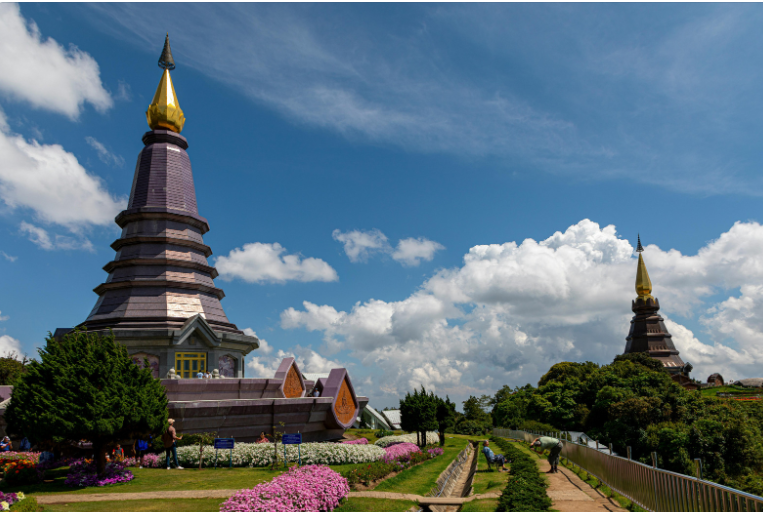
At the top stand the two twin royal pagodas, built by the Royal Thai Air Force for the 60th birthdays of King Bhumibol (1987) and Queen Sirikit (1992), surrounded by gardens of highland flowers.
What you’ll find
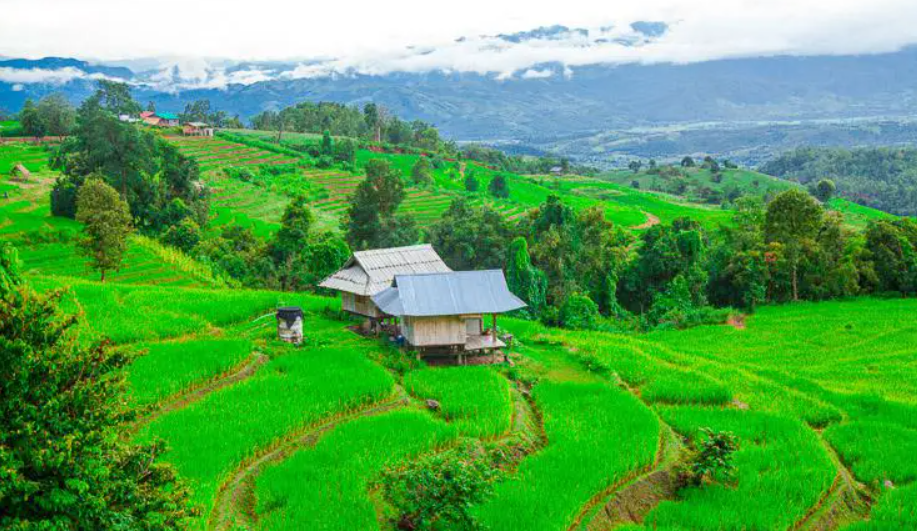
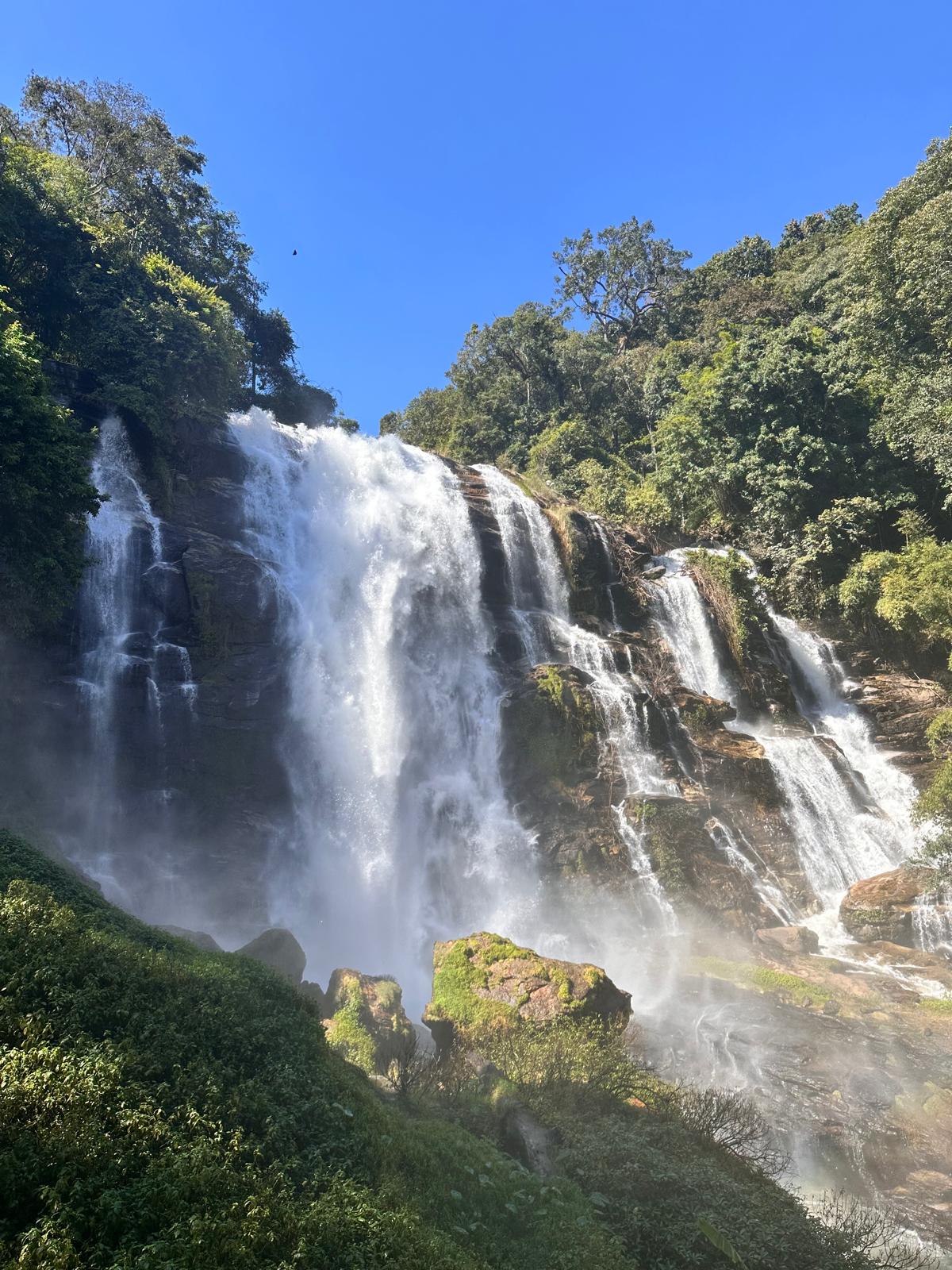
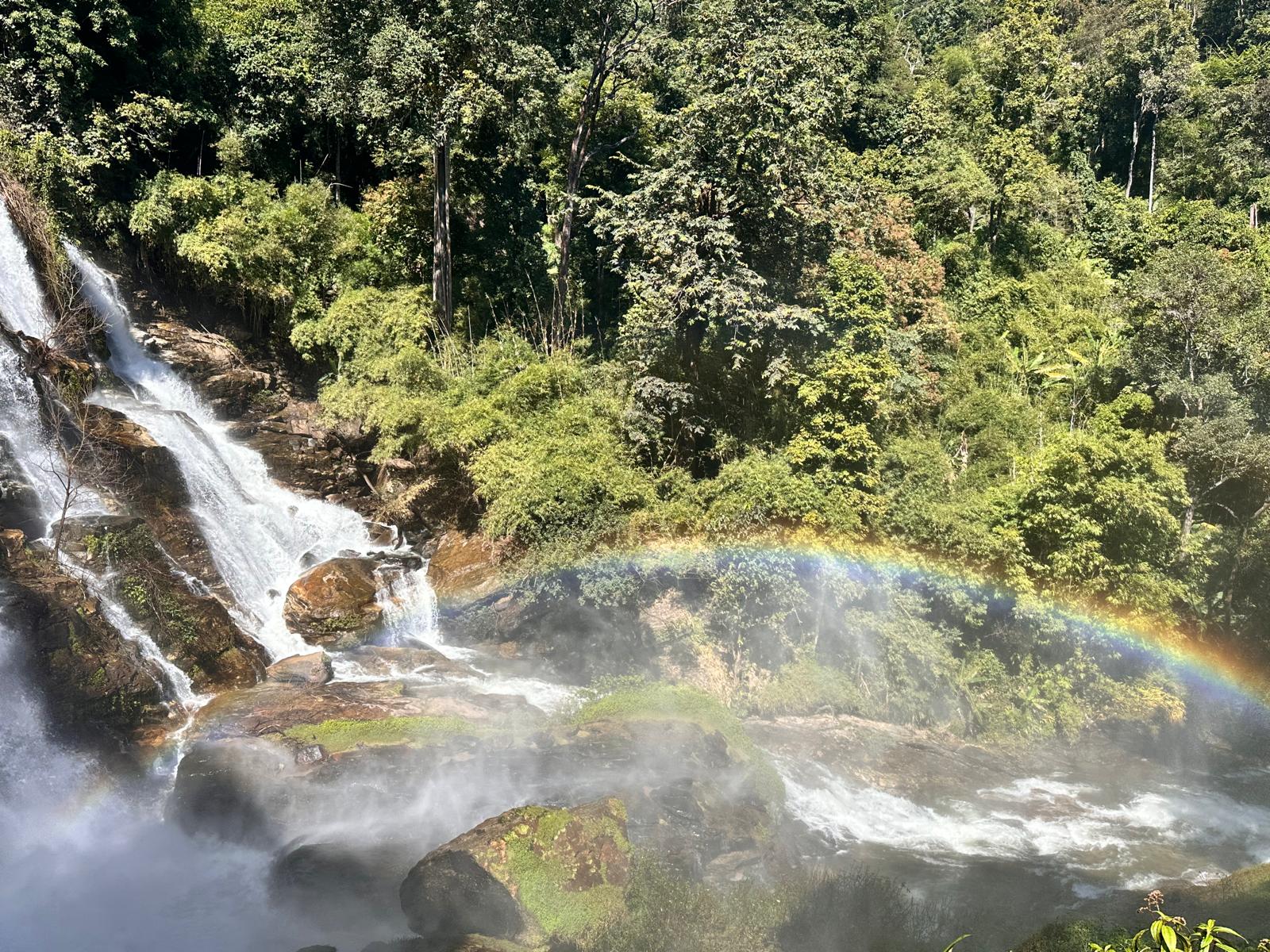
The climb crosses four landscapes in a single morning. Low down, the waterfalls: Mae Klang, Wachirathan with its 80-metre drop and permanent spray, and Siriphum, visible from the gardens. Higher up, the Kew Mae Pan nature trail, running along the cliff edge between rhododendrons and moss-covered trees, and Ang Ka, a boardwalk over the summit peat bog. On the slopes live Karen and Hmong communities who, since the Royal Projects, grow arabica coffee, strawberries and flowers instead of opium. And to the southeast, at the foot of the mountain, lie the rice terraces of Baan Pa Pong Piang, among the most beautiful in the country.
Doi Inthanon moments
The mountain changes with the months
November to February is the best season: clear skies, seas of cloud at sunrise and, in January, wild Himalayan cherry trees turning the slopes pink — what people here call Thai sakura. It gets genuinely cold, so bring a jacket.
Between July and October, with the rains, the forest is at its greenest and the waterfalls run hardest; it’s also when the Pa Pong Piang rice terraces reach the emerald green you see in every photograph.
It works perfectly as a day trip from Chiang Mai, though staying overnight in a family home among the rice fields changes the experience entirely: sunrise above the mist, with nobody around.