
Pai
A bohemian valley of rice fields, waterfalls and mountain mist — 762 curves north of Chiang Mai.
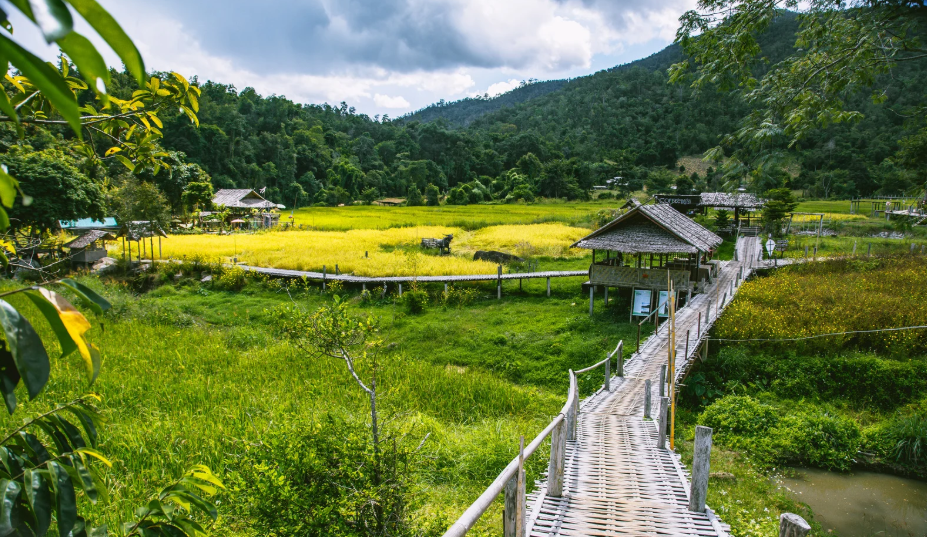
Where everything slows down
Nestled in a lush valley between Chiang Mai and Mae Hong Son, Pai is a small mountain town that grew from a quiet Shan settlement into one of northern Thailand’s most captivating escapes. Framed by rice terraces, bamboo forests and mist-covered hills, it holds on to the calm and simplicity that once defined rural Siam.
Pai was founded by Shan (Tai Yai) migrants who arrived from what is now Myanmar during the 18th century and settled along the fertile banks of the Pai River. Its early days were shaped by its position on the trade routes between Chiang Mai and Mae Hong Son, connecting Lanna merchants with Burmese and hill tribe communities.
During the Lanna Kingdom era, Pai remained a remote outpost influenced by both Lanna and Burmese culture, and its temples and architecture still carry traces of that fusion. For centuries it was a self-sufficient farming community known for rice cultivation, bamboo crafts and simple wooden houses surrounded by mountains.
In the mid-20th century Pai was still quiet and isolated, visited mainly by traders and missionaries. Foreign travellers only began to arrive in the late 1970s and early 1980s, drawn by its untouched nature and its stillness. Word spread along the backpacker trail, and Pai became a haven for artists, musicians and free-spirited wanderers.
Despite that growth, Pai has kept its soul — a balance between modern creativity and deep-rooted tradition. The rhythms of the Shan people, the smell of local coffee and the sound of temple bells at dusk still shape life in the valley, making Pai a living bridge between Thailand’s past and its present-day bohemian spirit.
What you’ll find
In Pai, life moves at a slower pace. You’ll find a small town full of charm: colourful cafés, handmade markets, bamboo bridges and rice fields that turn golden at sunset. The air feels different here, filled with the scent of roasted coffee and the sound of scooters winding up the mountain roads.
Watch the sun go down over Pai Canyon for panoramic views of the valley, soak in the Tha Pai Hot Springs and visit temples such as Wat Phra That Mae Yen, perched above the hills. Don’t miss Pai Walking Street, which turns the town into a lively market of food stalls, artisans and street musicians every evening.
For nature lovers, waterfalls like Pam Bok and Mo Paeng are refreshing escapes, while the nearby Chinese Yunnan Village and the Karen hill tribe communities reveal the cultural diversity that still defines the region.
Pai is not about rushing or ticking boxes — it’s about being present. Whether you spend the morning in a hammock overlooking the river or the night watching fireflies over the rice paddies, Pai invites you to slow down and breathe.
Pai moments
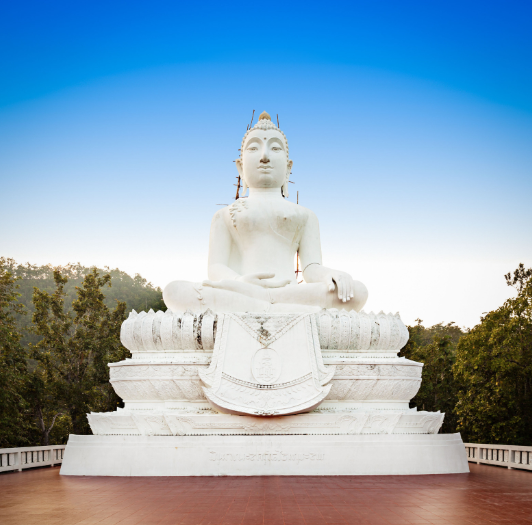
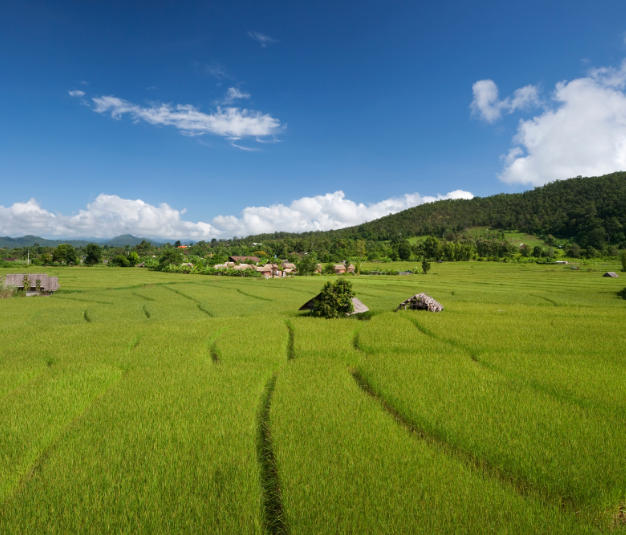
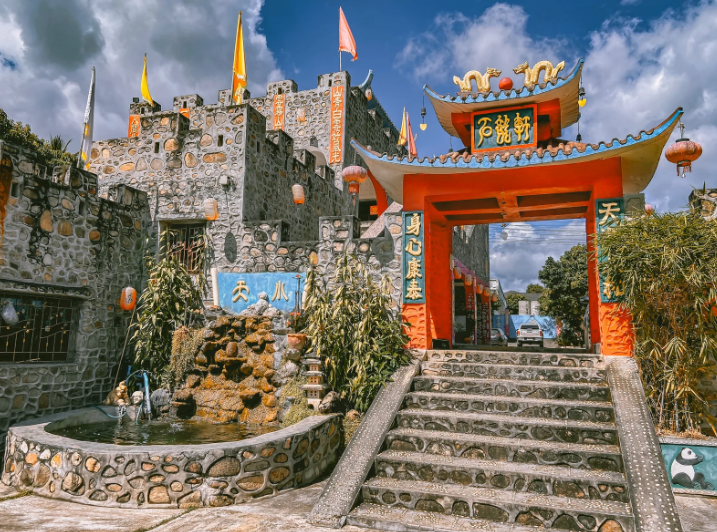
A valley to breathe in
Pai is the perfect escape for a three-day getaway, a place where energy and calm meet in harmony. It is popular with younger travellers for its artistic spirit, cosy cafés and live music nights, and it also keeps quiet corners surrounded by mountains and rice fields for those looking for stillness.
The journey itself is part of the experience: the road from Chiang Mai to Pai is famous for its 762 curves through thick forest. If you ride a motorbike, take it slowly, wear a helmet and enjoy it safely — the views are breathtaking and best savoured unhurriedly.
Whether you are watching the sunset from Pai Canyon or sitting by the river with a cup of tea, Pai offers a rare balance between adventure and serenity — a small valley that captures the true essence of northern Thailand.